
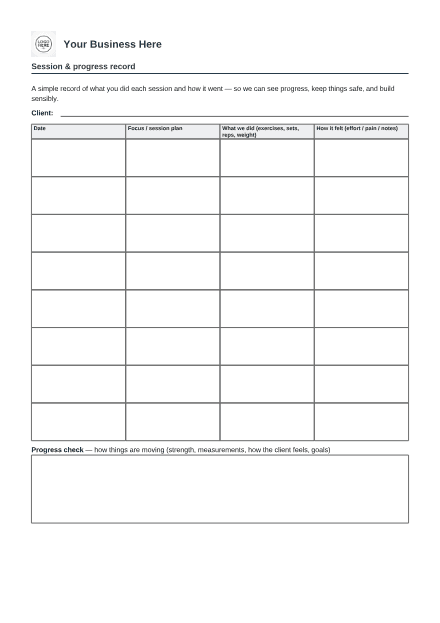
Session & progress record
A simple session & progress log — pain is a signal, recorded.
£4 inc. VAT — yours forever, no subscription.Or get it in the Fitness / PT pack — £29.
Type your business name and the preview updates in seconds — the real PDF, editable on screen or printable to fill in by pen. Nothing about your business leaves your browser.
What you need to know
The plain-English guidance that comes with this document.
- A training log is how you coach, not just record. Writing down what you did lets you progress load sensibly, spot what's working, and avoid the "what did we do last week?" fumble. It's the difference between programming and winging it.
- Note how it felt, not just the numbers. Effort (RPE), any pain or niggle, and how the client's moving tell you as much as the sets and reps. A recorded "left knee twinged on lunges" is what stops a niggle becoming an injury — and shows you responded to it.
- Pain is a signal — record it and act on it. If a client reports pain (not normal muscle fatigue), note it, adapt, and if it persists refer them on. A log that shows you noticed and responded protects the client and you.
- Progress is more than the scale. Track strength, reps, how clothes fit, energy, mood and the client's own sense of progress — not just weight. It keeps motivation up and keeps you away from fixating on numbers that can demoralise.
- It's personal data. Session notes, especially with any health or injury detail, are personal data — store securely and share with no one.
- Applies UK-wide. Good record-keeping is universal good practice and supports your insurance position if anything's ever queried.
Please note: This is a template for guidance only. Adapt it to your business and check it against current law and your insurance requirements. It is not legal advice.