
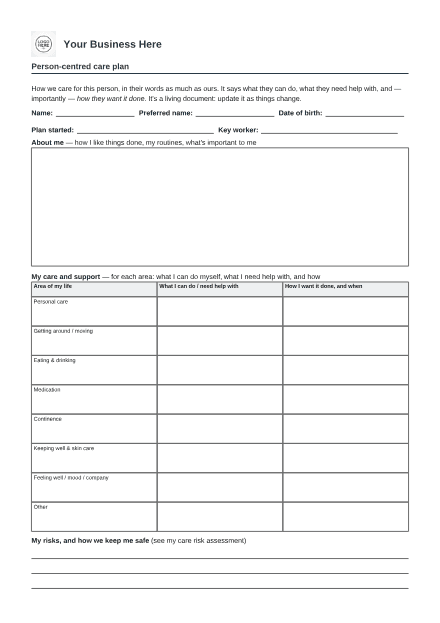
Person-centred care plan
How care is delivered, in the person's own words — a living document.
£14 inc. VAT — yours forever, no subscription.Or get it in the Care Services pack — £49.
Type your business name and the preview updates in seconds — the real PDF, editable on screen or printable to fill in by pen. Nothing about your business leaves your browser.
What you need to know
The plain-English guidance that comes with this document.
- "Person-centred" isn't a buzzword — it's the whole point. The plan should read like it's about this person, not a template with a name dropped in. Their preferences, routines and voice lead; the tasks follow. Regulators (and good care) start here.
- What they can do matters as much as what they can't. Care that does everything for someone takes away their independence and dignity. Record what the person can still do themselves, and support that — don't quietly de-skill them.
- It's a living document. A care plan written once and filed is dangerous — needs change, especially after a fall, an illness or a hospital stay. Review it regularly and whenever something changes, and make sure the people delivering care are working to the current version.
- Tie it to the risks. Everything flagged in the needs assessment and care risk assessment should be reflected here in how care is delivered — the plan is where risk controls actually happen day to day.
- Involve them, and get consent. Make the plan with the person (and, where they lack capacity for a decision, in their best interests with the right people involved). Record their agreement, or the best-interests decision and who was part of it.
- Professionally structured starting point — tailor and sign off. A registered manager or key worker adapts this to the individual and signs it; it's not "compliant out of the box".
- Applies UK-wide. Person-centred care planning is expected by the CQC (England), Care Inspectorate Wales, the Care Inspectorate (Scotland) and RQIA (NI). Check your regulator's specific standards.
Please note: This is a template for guidance only. Adapt it to your business and check it against current law and your insurance requirements. It is not legal advice.