
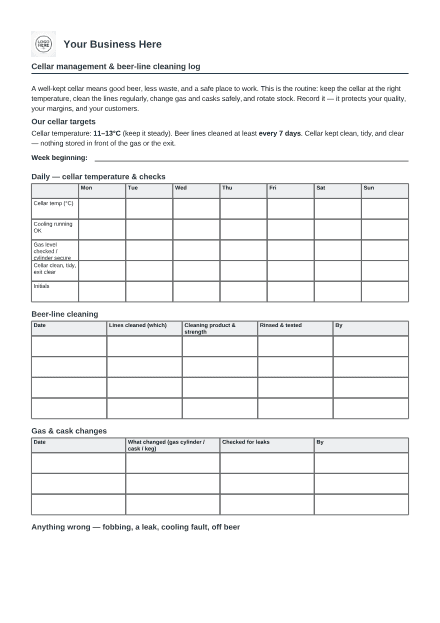
Cellar management & beer-line cleaning log
Temperature, line cleaning, gas changes and rotation — good beer, less waste.
£4 inc. VAT — yours forever, no subscription.Or get it in the Pub & Bar pack — £34.
Type your business name and the preview updates in seconds — the real PDF, editable on screen or printable to fill in by pen. Nothing about your business leaves your browser.
What you need to know
The plain-English guidance that comes with this document.
- A clean, cold, well-run cellar is where pub profit and beer quality live. Cask and keg beer is a living product: too warm and it spoils and fobs; dirty lines make it taste off and lose you customers. Keeping the cellar at a steady 11–13°C and cleaning lines on a regular cycle is the routine that protects both your reputation and your margins.
- Clean lines at least weekly — it's hygiene as well as taste. Beer lines build up yeast and bacteria; the industry standard is to clean them at least every seven days. Line-cleaning chemicals are hazardous (see below), so this is a food-hygiene and a safety task. Record which lines, when, and by whom.
- Line-cleaning chemicals are a COSHH matter — treat them properly. Cleaning fluid is corrosive: wear the right gloves and eye protection, never leave a bucket of cleaning solution unlabelled or where someone could drink it (a genuine cause of poisonings), and rinse lines thoroughly before serving. Your Safety pack's COSHH assessment covers this — do one for your cleaning chemicals.
- Gas changes are where the real danger is — see the separate assessment. Changing a CO₂ or mixed-gas cylinder is routine, but CO₂ is heavier than air and a leak in a confined cellar can displace oxygen and kill. This log records that changes happened and were leak-checked; the cellar gas safety assessment in this pack covers the life-safety controls (detection, ventilation, what to do if the alarm sounds). Use both together.
- Rotate stock — first in, first out. Casks and kegs have a shelf life; older stock forward, newer behind. Good rotation cuts waste and keeps beer in condition.
- Keep the cellar clear and the exit free. A cellar cluttered with empties and deliveries is a trip, fire and access hazard — and blocking the way to the gas shut-off or the exit is dangerous. Part of the daily check.
- Adapt to your dispense. A keg/cider-only bar cleans and changes differently from a multi-cask free house. Set your own line list and cycle, keep the completed sheets, and you'll have a clear record of a well-managed cellar.
Please note: This is a template for guidance only. Adapt it to your business and check it against current law and your insurance requirements. It is not legal advice.