
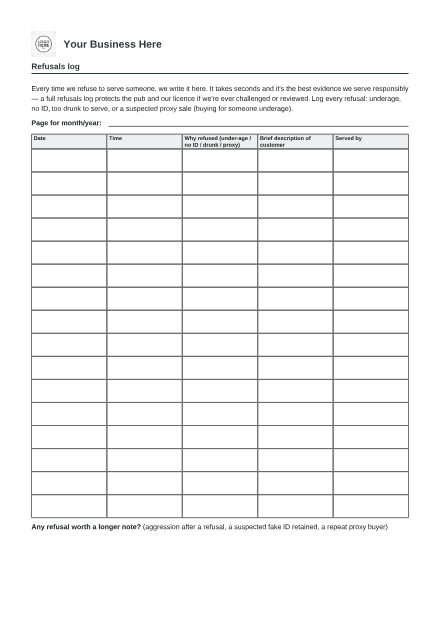
Refusals log
Age, no ID, drunk or proxy — every refusal logged is licence protection.
£7 inc. VAT — yours forever, no subscription.Or get it in the Pub & Bar pack — £34.
Type your business name and the preview updates in seconds — the real PDF, editable on screen or printable to fill in by pen. Nothing about your business leaves your browser.
What you need to know
The plain-English guidance that comes with this document.
- The most valuable single document behind your bar. If your licence is ever reviewed, or Trading Standards run a test purchase, a well-kept refusals log is the first thing that shows you're a responsible operator. Regular, genuine entries say "this pub refuses service properly all the time." An empty log says the opposite. Fill it in every time.
- Log all four reasons — drunk refusals count. Underage and no-ID are obvious, but refusing someone who's too drunk to serve, or a suspected proxy buyer, are just as important to record. They're refusals of unlawful sales, and each one is evidence of a switched-on team.
- Don't write down names — a description is better and safer. You rarely know a refused customer's name, and recording personal details you don't need creates a data-protection problem. "Male, early 20s, blue jacket, at the bar" makes the entry real without holding anyone's personal data.
- At the time, not from memory. Keep the log where staff can reach it behind the bar, with a pen. An entry made as it happens is worth far more than one reconstructed at the end of a shift.
- It's a management tool too. A pattern of drunk refusals at a certain time, or the same proxy buyer, tells you something — maybe about pacing last orders, a promotion, or a word with the door team. Review it, don't just file it.
- Keep the pages. Don't bin last month's sheet; keep a rolling record. An EPOS refusal function counts too, but a pad behind the bar never crashes.
Please note: This is a template for guidance only. Adapt it to your business and check it against current law and your insurance requirements. It is not legal advice.