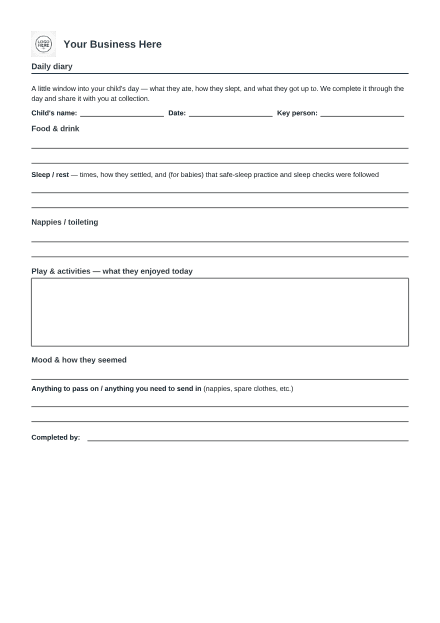
Daily diary (babies & toddlers)
Food, sleep, nappies and a moment worth sharing — a parent's peace of mind.
£4 inc. VAT — yours forever, no subscription.Or get it in the Childcare & Early Years pack — £39.
Type your business name and the preview updates in seconds — the real PDF, editable on screen or printable to fill in by pen. Nothing about your business leaves your browser.
What you need to know
The plain-English guidance that comes with this document.
- Safer sleep is now statutory (EYFS from 1 September 2026) — and the diary is a natural place to show it. For babies, the framework now requires safe-sleep practice: on the back, on a firm, flat surface in their own sleep space (a cot for those 12 months and under), with lightweight bedding tucked in below the shoulders, the sleep room kept around 16–20°C, babies under six months in the room with an adult, and frequent checks with children always within sight and hearing. Recording sleep times and that checks were done both reassures parents and evidences that you followed the requirement. Keep your fuller sleep-check log if you use one; this diary is the parent-facing summary. (Your risk assessment holds the full checklist.)
- The daily diary is the parent's peace of mind. For a parent leaving a baby or toddler, knowing they ate, slept and had a nice time is everything. A warm, specific diary ("loved splashing in the water tray") builds trust and keeps parents feeling involved — it's as much about the relationship as the record.
- The practical bits matter for care, not just reassurance. Food, fluids, sleep and nappies aren't just nice to know — they help you and the parent spot when a child's off-colour, not eating, or unsettled. Changes in these are often the first sign a child's coming down with something.
- Keep it genuine and kind. Write like a person, not a checklist. And be honest but tactful — a difficult day is worth a gentle word at pick-up rather than a stark line in the book.
- It supports (but doesn't replace) the learning records. The diary is the day-to-day; your observation and learning records track development against the EYFS. Keep them separate but complementary.
- It's about a child — handle it accordingly. Even a cheerful daily diary is personal data about a child. If it's a physical book that goes home, that's fine; if you use an app, make sure it's secure and parents consent.
- Professionally structured starting point. Adapt it to the ages you care for (babies need more detail than pre-schoolers) and your setting. England-led (EYFS); other nations have their own frameworks.
Please note: This is a template for guidance only. Adapt it to your business and check it against current law and your insurance requirements. It is not legal advice.