
Courtesy car agreement
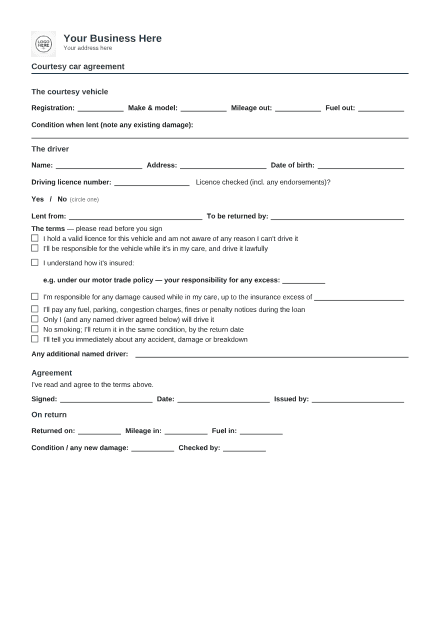
Loan terms, licence check, insurance excess and condition in/out.
£14 inc. VAT — yours forever, no subscription.Or get it in the Motor Trade pack — £29.
Type your business name and the preview updates in seconds — the real PDF, editable on screen or printable to fill in by pen. Nothing about your business leaves your browser.
What you need to know
The plain-English guidance that comes with this document.
- Check the licence — every time, before the keys. Confirm the driver actually holds a valid licence for the vehicle, and check for disqualifications or relevant endorsements. Lending a car to someone who can't legally drive it is a serious problem for you. Ask to see the licence (and, where relevant, a DVLA check code).
- Be crystal clear about insurance and the excess. The single biggest courtesy-car dispute is "who pays for the damage?". Spell out how the car is insured (usually under your motor trade policy), and that the customer is responsible for any excess if they damage it. Get them to acknowledge the excess figure in writing — that's what this form does.
- Record condition and fuel both ways. Note existing damage and the fuel level when it goes out, and again when it comes back. Photos help. This is what settles "that dent was already there" and "it came back empty".
- Fines and charges follow the driver. Make clear the customer pays any parking tickets, speeding fines, congestion or clean-air charges racked up during the loan — otherwise they land on you as the registered keeper and you're chasing them after the event.
- Name every driver. Only the people named and licence-checked should drive it. An unnamed driver may not be insured — and that's your exposure.
- Applies UK-wide. Insurance and licensing rules apply across the UK. Check your own motor trade insurance terms for exactly how courtesy loans are covered before you rely on this — the wording here must match your actual policy.
Please note: This is a template for guidance only. Adapt it to your business and check it against current law and your insurance requirements. It is not legal advice.