
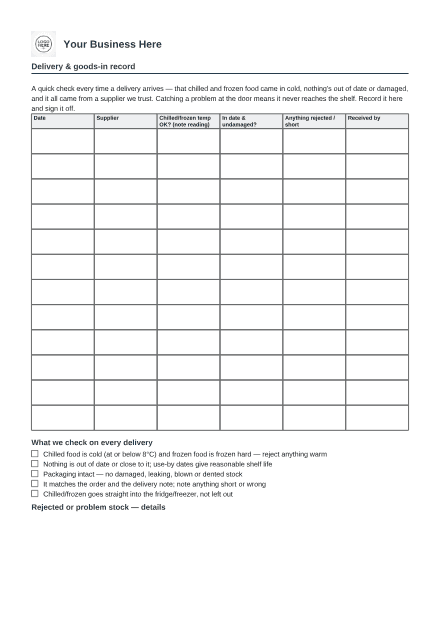
Delivery & goods-in record
Cold, in date and undamaged at the door — the cheapest place to catch a problem.
£4 inc. VAT — yours forever, no subscription.Or get it in the Convenience Store pack — £29.
Type your business name and the preview updates in seconds — the real PDF, editable on screen or printable to fill in by pen. Nothing about your business leaves your browser.
What you need to know
The plain-English guidance that comes with this document.
- The door is the cheapest place to catch a problem. A pallet of chilled stock that arrived warm, a case of short-dated milk, a leaking box — spot it at goods-in and it's the supplier's problem, not yours. Miss it and it's on your shelves, in your temperature logs, and potentially in front of a customer. A 30-second check per delivery pays for itself.
- Temperature-check chilled and frozen deliveries. Chilled food should arrive at or below 8°C and frozen food frozen solid. A quick probe (or checking the vehicle/consignment temperature) tells you the cold chain held on the way to you. Warm chilled food should be refused — don't take it "to be helpful" and hope.
- Get it into the fridge fast. However good the delivery, chilled and frozen stock left standing on the shop floor while you serve customers is warming up. Put it away first, price it later. This is a classic gap that shows up in food-poisoning investigations.
- Check dates at the door, not later. Suppliers occasionally send short-dated or even out-of-date stock. Catching it now means you can reject it and get a credit, rather than discovering it during a date-check when it's too late to send back.
- Know your suppliers — food safety is a chain. Buying from reputable suppliers, and being able to show where your food came from (traceability), is part of running a food business responsibly. Keep delivery notes with this record. If there's ever a recall, you'll be glad you can trace it.
- Adapt it to how you take deliveries. A shop with a daily fresh-food drop and a weekly grocery delivery might keep this by the back door; a smaller shop might only need it for chilled/frozen. Use it where the risk is — the cold and dated stock.
Please note: This is a template for guidance only. Adapt it to your business and check it against current law and your insurance requirements. It is not legal advice.