
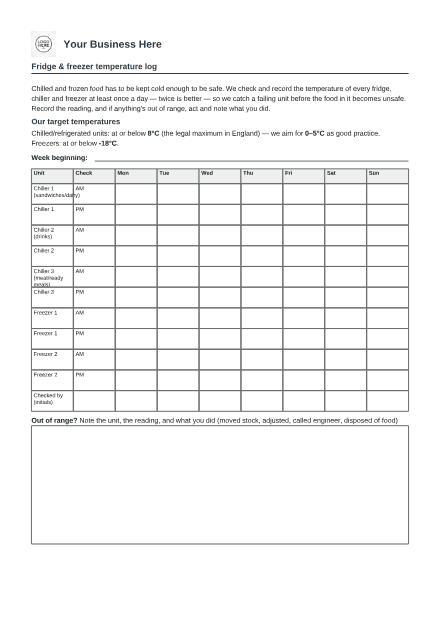
Fridge & freezer temperature log
Daily chiller and freezer checks — catch a failing unit before the stock's unsafe.
£4 inc. VAT — yours forever, no subscription.Or get it in the Convenience Store pack — £29.
Type your business name and the preview updates in seconds — the real PDF, editable on screen or printable to fill in by pen. Nothing about your business leaves your browser.
What you need to know
The plain-English guidance that comes with this document.
- Cold chain is food safety law, and the log is the proof. Chilled food kept too warm grows the bacteria that cause food poisoning. In England the law sets a maximum of 8°C for refrigerated food; sensible shops run chillers at 0–5°C to leave a margin. Recording temperatures daily is a core part of the "safe method" every food business is expected to follow (the Food Standards Agency's Safer Food, Better Business is built around exactly this).
- The reading you want is the food/unit temperature, not the room. Use the unit's built-in display or a probe/fridge thermometer. If you're unsure a unit's display is accurate, check it against a separate thermometer now and then. A unit that "looks cold" can be failing.
- Twice a day beats once. A morning and an afternoon check means a fridge that fails overnight or during a hot afternoon is caught within hours, not the next morning — the difference between adjusting a setting and binning a chiller full of stock.
- The corrective-action box is the important half. Anyone can tick a temperature. What protects you is showing what you did when one was wrong: moved the stock to a working unit, called an engineer, threw away food that had been too warm too long. An out-of-range reading with a clear action beside it is a shop managing risk properly.
- Know when to throw food away. If chilled food has been above 8°C, how long and how warm matters. Short and slightly over — often fine to move and use quickly. Long or well over — dispose of it. When in doubt, throw it out; it's cheaper than a food-poisoning case.
- Label the rows to match your shop. Rename the units to your actual chillers and freezers, add rows for a cellar or back-room store, and keep the completed weekly sheets. A rolling file of temperature logs is one of the fastest ways to reassure an environmental health officer.
Please note: This is a template for guidance only. Adapt it to your business and check it against current law and your insurance requirements. It is not legal advice.