
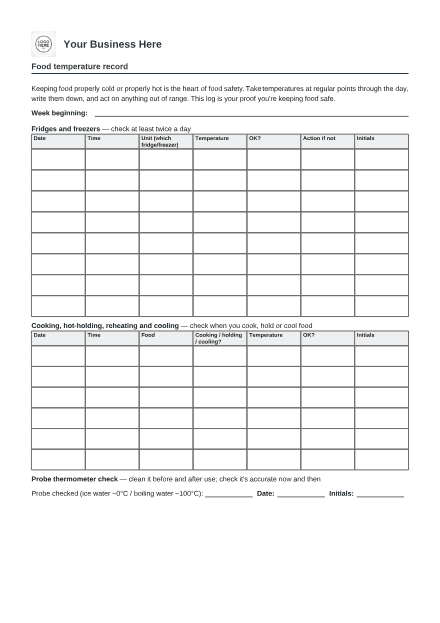
Food temperature record
Fridge, freezer, cooking and hot-holding temps — the log an inspector reaches for.
£4 inc. VAT — yours forever, no subscription.Or get it in the Food Safety pack — £29.
Type your business name and the preview updates in seconds — the real PDF, editable on screen or printable to fill in by pen. Nothing about your business leaves your browser.
What you need to know
The plain-English guidance that comes with this document.
- Know your numbers. By law, cold food must be kept at 8°C or below — but aim for 5°C or colder, which is where good fridges sit and where bacteria really slow down. Freezers should be at around -18°C. Hot food being held to serve must be kept at 63°C or above. When you cook or reheat, get the core of the food properly hot — 75°C at the centre is the usual target (in Scotland, reheat to 82°C). Cool cooked food you're not serving straight away quickly — ideally within about 90 minutes — and get it into the fridge.
- Twice a day for the fridges, minimum. A quick check morning and evening catches a failing fridge before the food in it becomes a problem. Many units have a built-in display; a quick glance and a written figure is all it takes. If a reading's out of range, act — move the food, turn the unit down, or bin it if it's been too warm too long — and write down what you did.
- The "action if not" column is the important one. Anyone can write down a good temperature. The value is in catching and dealing with a bad one. A record showing you spotted a warm fridge and moved the food is far stronger than a suspiciously perfect log.
- Use a clean probe, and check it works. A probe thermometer is the only way to know a food's core temperature. Clean and sanitise it before and after each use so it doesn't spread bacteria itself, and check its accuracy now and then in iced water (about 0°C) and boiling water (about 100°C).
- This is the record an inspector reaches for. Temperature records are one of the first things an environmental health officer looks at, and they underpin your food hygiene rating. A consistent, honest log tells them you've got a grip on the basics.
- It pairs with Safer Food, Better Business. The FSA's free "Safer Food, Better Business" pack is the recognised food safety management system for small caterers, and it asks you to keep records like this. Use SFBB as your overall system (don't reinvent it) and let these forms do the daily recording.
- Applies UK-wide, with small differences. The core temperature rules are consistent across the UK, though some specifics (like Scotland's 82°C reheat guidance) differ. Check your nation's food safety guidance if in doubt.
Please note: This is a template for guidance only. Adapt it to your business and check it against current law and your insurance requirements. It is not legal advice.