
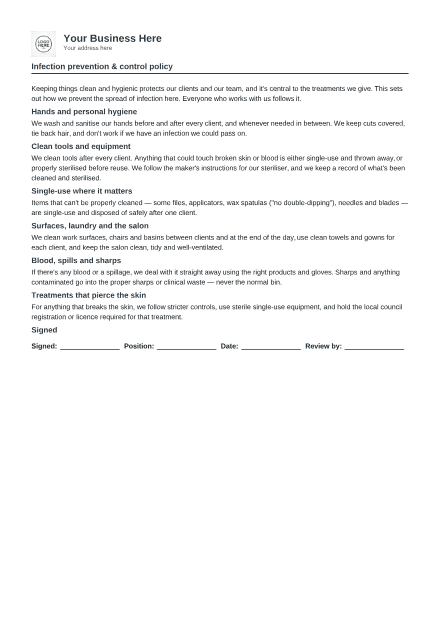
Infection prevention & control policy
Hygiene, single-use and sterilising — what an inspector and insurer look for.
£7 inc. VAT — yours forever, no subscription.Or get it in the Salon & Beauty pack — £29.
Type your business name and the preview updates in seconds — the real PDF, editable on screen or printable to fill in by pen. Nothing about your business leaves your browser.
What you need to know
The plain-English guidance that comes with this document.
- This is what an inspector and an insurer both look for. Hygiene is the core of a safe salon, and a clear, followed infection-control policy is your evidence you take it seriously. It protects clients from infections (and you from the complaint and the claim that follow one).
- Single-use means single-use. The classic salon infection risks are reusing something that should be binned — double-dipping a wax spatula, reusing a "disposable" file, a shared pot of product. If it can't be properly cleaned and sterilised, it goes after one client. It's cheap insurance.
- Foot spas are the one people forget. Pedicure basins and whirlpool foot spas have caused real infection outbreaks — bacteria live in the pipework. Drain, clean and disinfect them between every client and run the maker's full clean at the end of the day. Inspectors ask about this specifically.
- Know the difference between clean, disinfected and sterile. Cleaning removes dirt; disinfecting (e.g. an approved solution, or a barbicide jar) kills most germs on things that touch intact skin; sterilising (usually an autoclave) is for anything that could contact blood or broken skin. Match the method to the risk, and follow your equipment's instructions.
- Skin-piercing treatments have extra legal rules — and they differ by nation. If you do body piercing, tattooing, microblading, electrolysis, acupuncture or similar, you almost certainly need to register with your local council (England, outside London differs slightly) or hold a licence (Wales licenses special procedures; Scotland has its own scheme). Check with your local authority before you offer them — operating without the right registration or licence is an offence, and infection control is inspected closely.
- Injectables are a tightening picture — check before you offer them. Non-surgical cosmetic injectables (like botox and fillers) in England are subject to a new licensing regime for premises and practitioners; the rules are stricter than for ordinary beauty treatments and still developing. If you offer or plan to offer them, check the current requirements with your local authority — getting it wrong can be a criminal matter.
- Deal with blood properly, and use clinical/sharps waste. Any blood exposure needs prompt, gloved clean-up with the right products, and needles/blades must go into a proper sharps bin collected by a licensed waste carrier — not your general rubbish.
- Train everyone, and keep the cleaning record. Make sure every team member knows and follows this, and back it up with your cleaning & sterilisation record so there's proof it actually happens. If a client reports an infection afterwards, record it on your accident/incident form too.
- Applies UK-wide, with real local variation. The hygiene principles are the same everywhere, but registration/licensing for skin-piercing and cosmetic procedures genuinely differs across England, Wales, Scotland and Northern Ireland — always check your local council's requirements.
Please note: This is a template for guidance only. Adapt it to your business and check it against current law and your insurance requirements. It is not legal advice.