
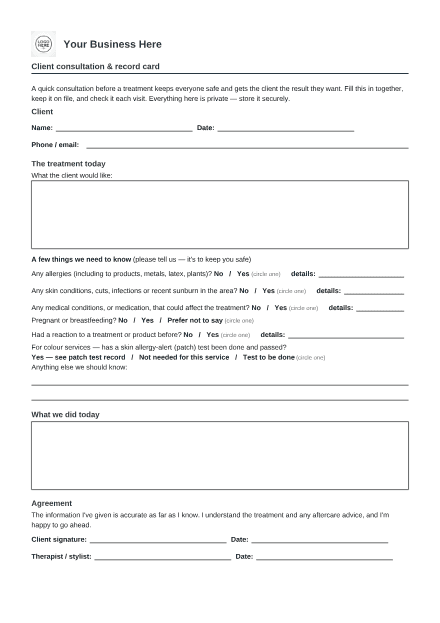
Client consultation & record card
The consultation and record card — health, history, consent and formula.
£7 inc. VAT — yours forever, no subscription.Or get it in the Salon & Beauty pack — £29.
Type your business name and the preview updates in seconds — the real PDF, editable on screen or printable to fill in by pen. Nothing about your business leaves your browser.
What you need to know
The plain-English guidance that comes with this document.
- The consultation is where you catch the problem before it happens. Two minutes on allergies, skin conditions, medication and past reactions is what stops a bad reaction, a botched result or a complaint. It also shows you took reasonable care — which matters if a client ever does react. Do the full card with every new client; regulars get a "has anything changed?" on the visit log.
- The tick grid is deliberate. Clients tick what applies far more honestly and completely than they answer "any medical conditions?" — most people don't think of their blood thinners or their cold sores as "a medical condition". The grid covers the conditions that matter across hair, skin, nails, waxing, lashes and electrical treatments; use your contraindication checklist to decide what a tick means for the specific treatment today.
- Ask about colour used elsewhere. Home box dye, henna and relaxers are the classic cause of a colour going wrong — metallic salts and old build-up react unpredictably with salon products. A client won't think to mention it unless you ask, which is why it's on the grid.
- Under-16s: no colour, and get a parent's consent for the rest. Hair colour and most tints aren't intended for under-16s (it's on the product instructions) and salon insurance usually excludes them. For other treatments on a child, a parent or guardian should be present and sign — that's why the card has a line for them. Date of birth is there so you know, not so you guess.
- Write your assessment down, and the formula. What you observed (skin type, scalp condition, a contraindication you spotted) and how you adapted is the professional judgement an insurer wants to see. Then on every visit, record exactly what you used — the colour formula, developer, timings, products. "I think it was a 6.0..." is not a record.
- The agreement is itemised on purpose. A single "I agree" line proves very little. Separate ticks — accurate information, risks explained, aftercare given, records and privacy, the right to withdraw — are what a claims handler looks for, and they take the client thirty seconds. The photo and marketing consents are the ones your privacy notice promises; a "no" means no.
- This is health information — treat it like it. What a client tells you about their health and medication is sensitive personal data under UK GDPR. Keep these cards secure (locked away or in a password-protected system), don't leave them on the desk, and keep treatment records for 3 years after the client's last visit — the period your insurer may need them — then dispose of them securely. If your insurer asks for longer, match the wording on the card and in your privacy notice to what they require.
- It supports your insurance. Most salon insurance expects you to consult, record, and (for colour) patch test. A missing or skipped consultation card is exactly what an insurer looks for when deciding whether to pay out on a claim.
- Applies UK-wide. Good consultation and record-keeping are expected everywhere, and UK GDPR applies across the whole UK. Some treatments (anything piercing the skin) carry extra local rules — see your infection control policy.
Please note: This is a template for guidance only. Adapt it to your business and check it against current law and your insurance requirements. It is not legal advice.