
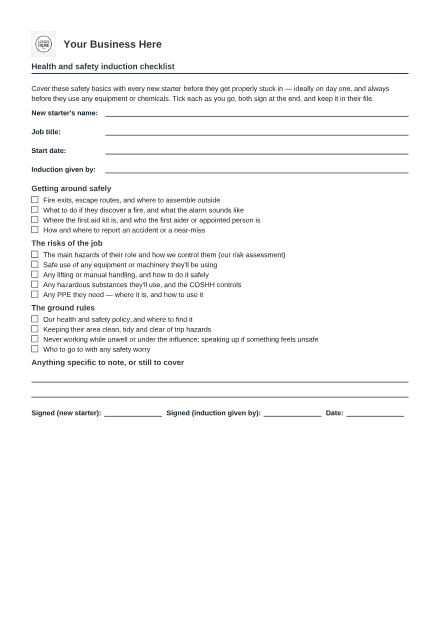
Health and safety induction checklist
The day-one safety induction, ticked off and signed.
£7 inc. VAT — yours forever, no subscription.Or get it in the Safety Records pack — £29.
Type your business name and the preview updates in seconds — the real PDF, editable on screen or printable to fill in by pen. Nothing about your business leaves your browser.
What you need to know
The plain-English guidance that comes with this document.
- Day one, before they touch anything risky. New starters are more likely to be hurt in their first few weeks than at any other time — they simply don't know the hazards yet. Run this before they use equipment, handle chemicals, or work unsupervised, not at the end of week one.
- It's a legal duty, not a nicety. You have to give staff the information, instruction and training they need to work safely. This checklist is how you show you did — and where you did it thoroughly.
- Show, don't just tell. Walk them to the fire exits. Point out the assembly point. Open the first aid kit. Demonstrate the equipment and watch them do it. A ticked box after a real walk-round is worth ten after a quick chat.
- It pairs with two other documents. Your HR new-starter checklist prompts you to do this; your health and safety policy is what it introduces. Use all three together and a new starter's first day is properly covered.
- Go slower for young or inexperienced workers. A 17-year-old on their first-ever job needs more supervision and clearer, simpler instruction — and a closer eye for the first while.
- Keep the signed copy. It's your evidence that the induction happened, which matters if there's ever an accident or an inspection. File it with their records.
- Refresh it when things change. A new machine, a new process, or a move to a different role means covering the new risks — a top-up induction, not starting from scratch.
- Across the UK. The duty to inform, instruct and train applies throughout Great Britain and Northern Ireland alike.
Please note: This is a template for guidance only. Adapt it to your business and check it against current law and your insurance requirements. It is not legal advice.