
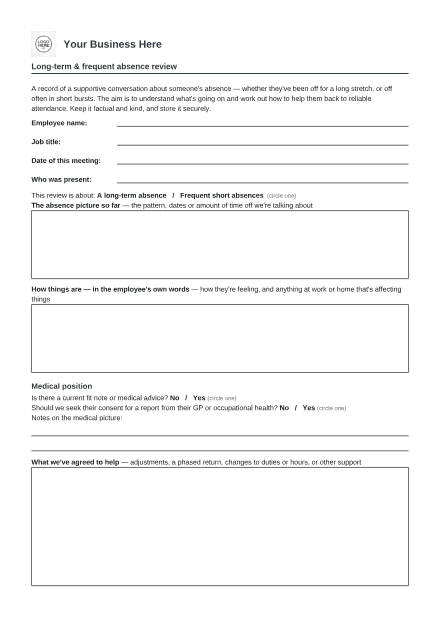
Long-term & frequent absence review
A supportive absence conversation, recorded properly — capability, not conduct.
£7 inc. VAT — yours forever, no subscription.Or get it in the HR Essentials pack — £39.
Type your business name and the preview updates in seconds — the real PDF, editable on screen or printable to fill in by pen. Nothing about your business leaves your browser.
What you need to know
The plain-English guidance that comes with this document.
- Support first — this is not a disciplinary. Genuine ill-health absence is a capability matter, not misconduct. Go in wanting to understand and help, not to warn or punish. Handling real sickness as a disciplinary issue is one of the fastest routes to an unfair dismissal or discrimination claim. Keep the tone in this record supportive, because it may be read back later.
- Long-term and frequent absence need different handling. For one long absence, the focus is keeping in touch, understanding the prognosis and planning a realistic return. For lots of short absences, it's about spotting any underlying cause (which might be a health condition, or something at work) before treating it as a reliability issue. This form flags which one you're dealing with so you approach it the right way.
- Think Equality Act before you think "capability dismissal". A long-term or recurring condition may be a disability in law, which brings a duty to make reasonable adjustments and strong protection from being dismissed or treated unfavourably because of it. Explore adjustments — phased returns, changed duties, different hours, equipment — and record them here before any thought of ending employment. If in doubt about whether a condition counts, take advice.
- Get medical evidence — with consent. Before big decisions, get proper medical input: a fit note, a GP report or an occupational health referral. You need the employee's consent to obtain a medical report, and they have rights to see it first. Occupational health advice is often the single most useful thing you can get, and it needn't be expensive for a small employer.
- Keep in touch, but don't harass. Reasonable, agreed contact during a long absence is good practice and keeps the return warm. Constant calls and pressure to come back are not — they can make things worse and become a legal risk in themselves. Agree how and how often you'll be in touch, and write it down.
- Only after a fair process, and with notice. If, after genuine support and medical evidence, someone still can't do the job in a reasonable timeframe, a capability dismissal may eventually be fair — but only after a proper, documented process, consideration of adjustments and alternatives, and giving the notice their contract requires. This form is the paper trail that shows you did it properly.
- Lock the record away. Everything here is special-category health data under UK GDPR. Store it securely, share it only with those who must know, and keep it out of the general staff file.
- Applies UK-wide, with the usual NI point. The Equality Act 2010 covers England, Wales and Scotland; Northern Ireland's equivalent equality law offers similar protection. The good-practice steps above hold wherever you are.
Please note: This is a template for guidance only. Adapt it to your business and check it against current law and your insurance requirements. It is not legal advice.