
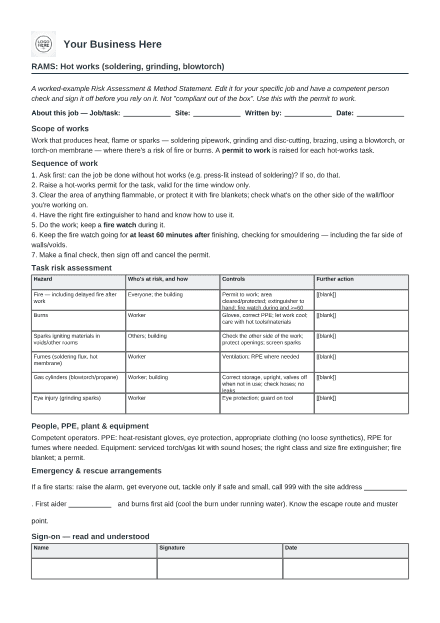
RAMS — Hot works (soldering, grinding, blowtorch)
Heat, flame and sparks — with the permit and a 60-minute fire watch.
£14 inc. VAT — yours forever, no subscription.Or get it in the Construction RAMS pack — £49.
Type your business name and the preview updates in seconds — the real PDF, editable on screen or printable to fill in by pen. Nothing about your business leaves your browser.
What you need to know
The plain-English guidance that comes with this document.
- Most hot-works fires start after the tools are packed away. Sparks and heat smoulder unseen — in wall voids, under floors, in insulation — and catch hold once everyone's gone. That's why the fire watch continues for at least an hour after you finish, and why you check the other side of what you were working on. This single control prevents the classic hot-works catastrophe.
- Always ask if you can avoid the flame. Press-fit fittings, mechanical joints and cold methods remove the fire risk entirely. The safest hot works is the hot works you didn't need to do.
- Use the permit — it forces the checks. A hot-works permit makes someone confirm the area's clear, the extinguisher's there and the fire watch is set, before the torch is lit, and makes the end of the job a deliberate, checked moment. Pair this RAMS with your permit to work.
- Mind the gas. Store cylinders upright and secure, turn valves off when not in use, check hoses for leaks, and never use a blowtorch near stored flammables.
- Torch-on roofing is the highest-risk hot work — take extra care with fire watch, edge protection and what's beneath the deck. If it's a large or complex roof, that's beyond this everyday RAMS — get a competent person.
- Starting point — get it signed off. Edit for your job, have a competent person review it, and use it with the permit to work and your fire precautions on site.
Please note: This is a template for guidance only. Adapt it to your business and check it against current law and your insurance requirements. It is not legal advice.