
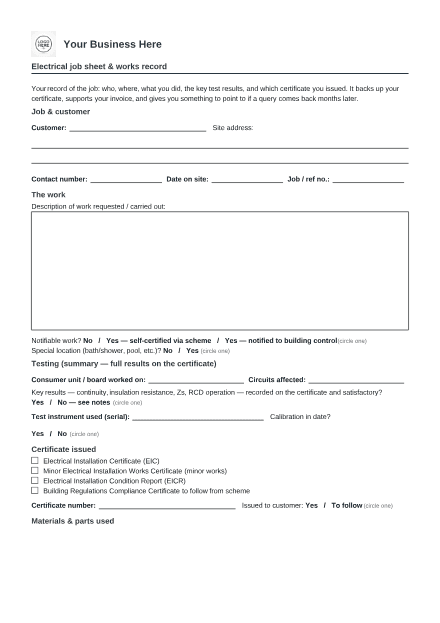
Electrical job sheet & works record
What you did, what you tested, which certificate — your evidence months later.
£7 inc. VAT — yours forever, no subscription.Or get it in the Electrician pack — £34.
Type your business name and the preview updates in seconds — the real PDF, editable on screen or printable to fill in by pen. Nothing about your business leaves your browser.
What you need to know
The plain-English guidance that comes with this document.
- The job sheet is your memory and your evidence — it isn't the certificate. The statutory certificate (EIC, minor works or EICR) carries the formal test results and is issued through your scheme's system. This sheet sits alongside it: a fuller, human record of what you did, what you used, and what you advised. When a customer rings three months later asking "did you look at the garage circuit?", this is what answers them.
- Note the certificate you issued, and its number. Tying each job to its certificate reference means you can find it fast, prove the work was certified, and show the notifiable side was handled. A job with no recorded certificate is a gap you don't want in a dispute or an insurance claim.
- Record the instrument and that it was in calibration. A certificate is only as good as the tester behind it. Noting the serial number and that calibration was in date links your results to a valid instrument — and if a batch of results is ever questioned, you can show which meter produced them (see the calibration log in this pack).
- Capture the "left safe" and "further work advised" lines every time. If you couldn't finish, or you spotted something dangerous you were not asked to fix, write down that you made it safe and told the customer. That record protects you — "I advised them the tails needed replacing and noted it" is worth a great deal if something goes wrong later.
- Get a customer signature where you can. Not essential, but a signed acknowledgement that the work was done and the area left tidy heads off "you never finished" disputes and supports your invoice.
- It holds customer personal data — treat it accordingly. Names, addresses and contact details are personal data. Keep your job records secure, and don't keep them longer than you need for warranty, tax and certification purposes.
- Adapt it to how you work. A rewire, a fault-find and an EICR are different jobs — trim or expand the sheet to suit, and keep the completed records together as your job history.
Please note: This is a template for guidance only. Adapt it to your business and check it against current law and your insurance requirements. It is not legal advice.