
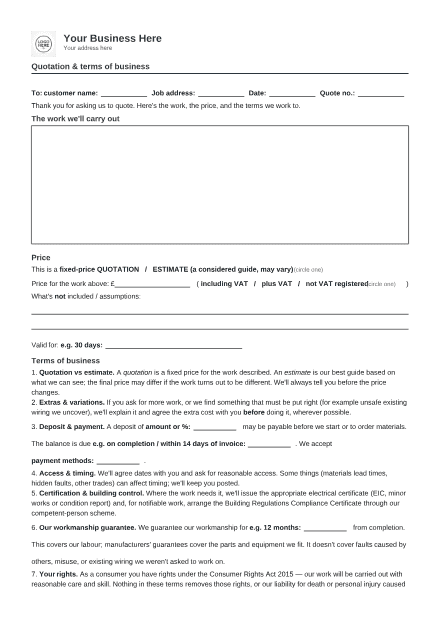
Quotation, estimate & terms of business
Quote vs estimate, variations, deposits and guarantee — most disputes die here.
£14 inc. VAT — yours forever, no subscription.Or get it in the Electrician pack — £34.
Type your business name and the preview updates in seconds — the real PDF, editable on screen or printable to fill in by pen. Nothing about your business leaves your browser.
What you need to know
The plain-English guidance that comes with this document.
- A clear quote with terms prevents almost every payment dispute. Most rows between tradespeople and customers come down to "that's not what I thought I was paying for." Describing the work, fixing the price (or clearly calling it an estimate), and stating your terms up front is the single best protection for your cash flow and your reputation.
- Quotation vs estimate is a real legal distinction — don't blur it. A quotation is a fixed price you're broadly bound to; an estimate is a guide that can move. Say which one this is. If you call something a "quote" and then try to charge more, you're on weak ground — so if the job is uncertain (old wiring, hidden faults), quote an estimate and explain why.
- The variations clause is the one that saves you. Electrical jobs routinely uncover problems once boards come off and floors come up. Agreeing extras before you do them — not presenting a surprise bill at the end — keeps the customer on side and keeps you paid. Put it in writing, even a quick text confirming the extra.
- You can't sign away the customer's core rights, or your negligence liability — and shouldn't try. The Consumer Rights Act requires your work to be done with reasonable care and skill, and UK law voids any attempt to exclude liability for death or personal injury from your negligence. These terms are written to respect that. Rely on doing good work and being properly insured, not on disclaimers.
- Know the home/distance cancellation right. If a consumer agrees the job in their home or at a distance (not at your premises), they often have a 14-day cancellation right — and if you start work within that period at their request, there are rules about that. For a big job it's worth a line acknowledging it; for emergencies there are exceptions. Being straight about this heads off a nasty dispute on a cancelled contract.
- Tie in your certification and guarantee. Reminding the customer they'll get the right certificate, and stating your workmanship guarantee period, both reassure them and set expectations. Keep the guarantee about your labour — manufacturers' warranties cover the kit.
- Set your own figures and keep it consistent. Deposit, payment terms and guarantee length are your business decisions — fill them in once and use the same terms every time. Adapt the wording to how you actually operate, and consider a professional review if you take on larger commercial contracts.
Please note: This is a template for guidance only. Adapt it to your business and check it against current law and your insurance requirements. It is not legal advice.