
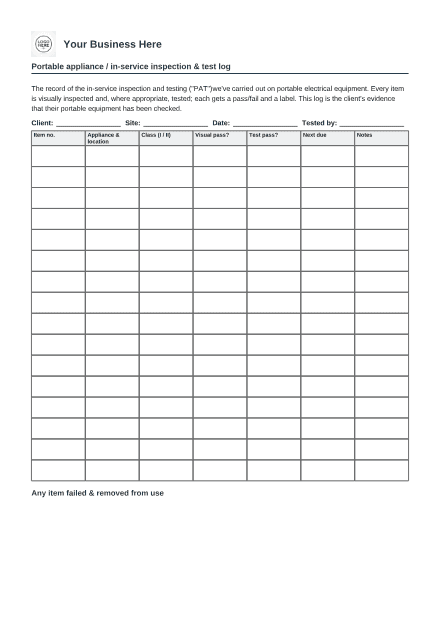
PAT / in-service inspection log
The client's evidence their portable kit is checked — a steady yearly earner.
£7 inc. VAT — yours forever, no subscription.Or get it in the Electrician pack — £34.
Type your business name and the preview updates in seconds — the real PDF, editable on screen or printable to fill in by pen. Nothing about your business leaves your browser.
What you need to know
The plain-English guidance that comes with this document.
- PAT is a steady earner — and it helps your customers meet a real duty. Businesses have to keep electrical equipment safe (the Electricity at Work Regulations 1989), and in-service inspection and testing of portable appliances is how many do it. Offering it well, with a clear log and labels, turns you into the person a business calls every year — landlords, offices, salons, pubs, gyms and shops all need it.
- Frame it correctly — there's no law that says "test everything every year". The legal duty is to keep equipment safe; PAT is a widely-used way of meeting it, not a legal interval in itself. The right frequency depends on the equipment and its environment — a power tool on a building site needs checking far more often than a lamp in an office. Advise sensible intervals rather than blanket annual testing, and you'll be trusted (and often busier).
- Most faults are found by looking, not testing. The visual inspection — damaged leads, cracked plugs, scorching, wrong fuses, taped-up joints — catches the majority of dangerous items, often before any instrument is used. Record the visual result as well as the test; a competent visual check is the heart of the job.
- Label, and record what failed. Every item should get a pass/fail label, and a failed item should be labelled "do not use" and taken out of service there and then — not left plugged in with a note. Recording the failures (not just the passes) is what shows you actually protected the client, and gives them the evidence they acted.
- Give the client the log — it's their evidence. The value to the business is being able to show, to an inspector or insurer, that their equipment is checked. Hand over the completed register (and keep your own copy). Note the totals so they can see the picture at a glance.
- Use a calibrated PAT tester. Like your other instruments, a PAT tester needs to be calibrated for its results to mean anything — record it in the calibration log in this pack. Adapt this register to how you deliver PAT (some use asset numbers and software; a printed log works everywhere and never crashes).
Please note: This is a template for guidance only. Adapt it to your business and check it against current law and your insurance requirements. It is not legal advice.