
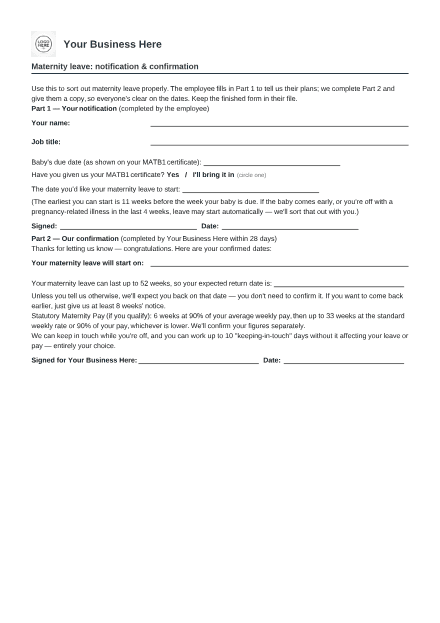
Maternity leave notification & confirmation
Arrange maternity leave and confirm the dates in writing.
£7 inc. VAT — yours forever, no subscription.
Type your business name and the preview updates in seconds — the real PDF, editable on screen or printable to fill in by pen. Nothing about your business leaves your browser.
What you need to know
The plain-English guidance that comes with this document.
- The clock starts 15 weeks before the due date. To claim maternity leave and pay, an employee should tell you the baby's due date and when they want their leave to start by the end of the 15th week before the baby's due (often called the "qualifying week"). They can change the start date later as long as they give you 28 days' notice.
- You must confirm the dates in writing within 28 days. Once they've told you their start date, you have 28 days to write back confirming the date their leave starts and — the bit people forget — the date it ends (their expected return). Part 2 of this form does exactly that. Getting the return date down in writing avoids the classic muddle of no one being sure when they're due back.
- Leave is a day-one right; pay has a service test. Any employee can take up to 52 weeks' maternity leave from their first day — there's no qualifying period for the leave. Statutory Maternity Pay is different: they generally need about 26 weeks' service by the qualifying week and to earn over the lower earnings limit. Someone can be entitled to the leave but not the statutory pay (they may be able to claim Maternity Allowance from the DWP instead).
- The money, in plain terms. SMP runs for up to 39 weeks: the first 6 weeks at 90% of their average weekly earnings, then up to 33 weeks at the flat statutory rate (£194.32 a week from April 2026) or 90% of their earnings if that's lower. You can usually reclaim most or all of it back from HMRC, so don't let the cost put you off doing it right. The rate rises every April — check the current figure before you fill in the numbers.
- They're protected — treat the pregnancy as confidential and don't disadvantage them. Pregnancy and maternity are protected under the Equality Act from day one. Don't leave someone off the rota, out of a pay rise or off the training list because they're pregnant or on leave — that's discrimination, and redundancy during or around maternity leave carries extra legal protection you need to get advice on.
- Two weeks off after the birth is compulsory. By law a new mother must take at least 2 weeks off straight after giving birth (4 weeks if she works in a factory) — this isn't optional, even if she's keen to come back.
- Applies UK-wide, but keep an eye on the detail. Statutory maternity leave and pay apply across the UK. Employment law in Northern Ireland is set separately and usually mirrors this, but where a specific figure or reform differs, check the current NI position.
Please note: This is a template for guidance only. Adapt it to your business and check it against current law and your insurance requirements. It is not legal advice.