
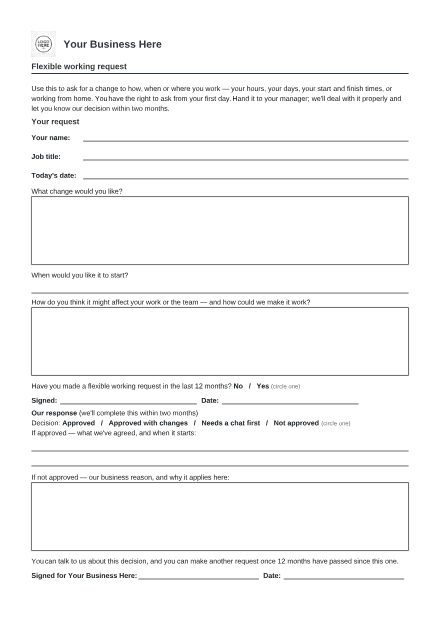
Flexible working request
The day-one flexible-working request and your response, on one form.
£7 inc. VAT — yours forever, no subscription.Or get it in the HR Plus pack — £39.
Type your business name and the preview updates in seconds — the real PDF, editable on screen or printable to fill in by pen. Nothing about your business leaves your browser.
What you need to know
The plain-English guidance that comes with this document.
- This is a day-one legal right — take it seriously. Since April 2024, any employee can ask for flexible working from their very first day, and can make two requests in any 12-month period. It isn't a favour you're granting; it's a statutory process, and mishandling it can land you at a tribunal.
- You've got two months to decide — and you must actually deal with it. From the date of the request you have two months to make a decision (you can extend that only by agreement with the employee). "Dealing with it reasonably" means talking it through with them, not just firing back a no.
- You can only refuse for one of eight set reasons. The law lets you turn a request down only on specific business grounds: extra cost; a bad effect on meeting customer demand; not being able to reorganise work among existing staff; not being able to recruit; a hit to quality; a hit to performance; not enough work at the times they want to work; or planned changes to the business. If your reason isn't really one of these, you can't refuse on it.
- What's changing (Employment Rights Act 2025). New rules are coming that will require you to show your refusal is reasonable and to explain why — with more prescriptive steps for how you consult. They aren't fully in force yet, but they're the direction of travel, so getting into the habit now of giving a genuine, well-explained answer is the safe move.
- Mind the discrimination trap. Flexible working requests often come from people juggling childcare or managing a health condition. Refuse without real thought and you risk an indirect sex discrimination or disability claim on top of the flexible-working one. A trial period is often a sensible middle path.
- Put the outcome in writing, and keep it. Whatever you decide, confirm it on this form, give them a copy, and file it. A clear record protects both sides.
- Scotland is the same; check the Northern Ireland position. In England, Wales and Scotland the day-one right and the rules above apply. Northern Ireland has its own flexible working law, and the day-one change may not apply there in the same way — if you're in NI, check the current NI rules before you respond.
Please note: This is a template for guidance only. Adapt it to your business and check it against current law and your insurance requirements. It is not legal advice.