
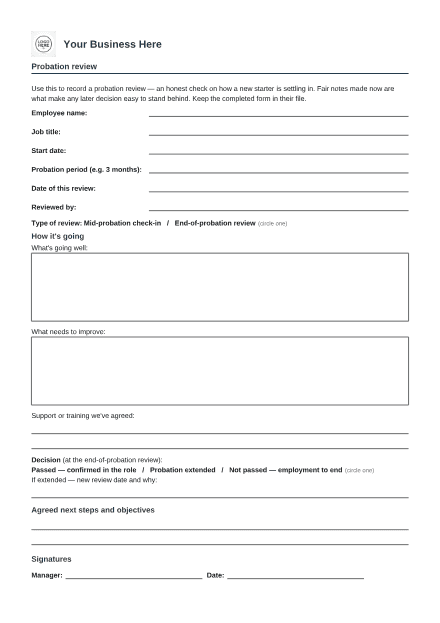
Probation review form
Run and record a fair probation review — mid-point or end.
£7 inc. VAT — yours forever, no subscription.Or get it in the HR Plus pack — £39.
Type your business name and the preview updates in seconds — the real PDF, editable on screen or printable to fill in by pen. Nothing about your business leaves your browser.
What you need to know
The plain-English guidance that comes with this document.
- Probation is your trial period, not a legal shield. A probationary period is something you set — the law doesn't grant you extra freedom during it. Staff still have day-one rights the whole way through (protection from discrimination, and from dismissal for things like pregnancy, whistleblowing or asserting a legal right). So run a fair, recorded review rather than assuming "they're on probation, I can just let them go".
- The safety net is getting shorter — from January 2027. In Great Britain the qualifying period for ordinary unfair dismissal drops from two years to six months (part of the Employment Rights Act 2025). A long probation used to sit comfortably inside a two-year window; it won't from 2027, so honest, documented reviews matter more than ever.
- Don't let it drift past the end date. If someone sails past the end of their probation with no review and no word, you'll usually be treated as having confirmed them. Diary the review before the end date (your new starter checklist prompts this) and actually hold it.
- Be specific, and give a fair chance. Record real examples of what's going well and what isn't — not vague impressions. If there are concerns, a mid-probation check-in that spells them out, with support offered, is both fairer and far more defensible than a surprise "no" at the end.
- Extending probation — only if you can. You can only extend if the contract or statement of main terms allows it. If you do, tell the person why and set a clear new review date, rather than letting it roll on indefinitely.
- Not passing someone still needs a fair process — and notice. Give your reasons, ideally in a short meeting, and check the real reason isn't something that's unfair from day one (pregnancy, a disability, raising a health-and-safety or pay concern). And you must still give the notice set out in their statement of main terms — a failed probation doesn't cancel notice.
- Northern Ireland works to a different clock. In NI the qualifying period for ordinary unfair dismissal is one year, and the Great Britain move to six months from January 2027 doesn't apply there — so in NI probation still sits inside a longer window. The fairness points above apply UK-wide.
- Keep it secure. A completed review holds personal data, including opinions about someone's work — file it confidentially, and share it only with those who need it.
Please note: This is a template for guidance only. Adapt it to your business and check it against current law and your insurance requirements. It is not legal advice.