
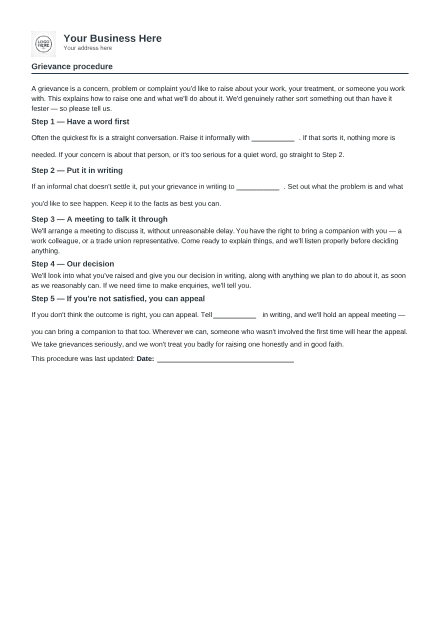
Grievance procedure
The staff grievance process your statement of terms must point to.
£7 inc. VAT — yours forever, no subscription.Or get it in the HR Plus pack — £39.
Type your business name and the preview updates in seconds — the real PDF, editable on screen or printable to fill in by pen. Nothing about your business leaves your browser.
What you need to know
The plain-English guidance that comes with this document.
- This is the document your statement of main terms is legally required to point at. The written statement has to tell staff how to raise a grievance and where to find the procedure — this is that procedure. It's also the missing half of the Acas Code: you've got the disciplinary side, this completes the pair.
- If a grievance comes in, follow these steps. Grievances are judged against the Acas Code just like discipline. Unreasonably ignoring it can add up to 25% to a tribunal award against you; following it fairly can cut one. The steps aren't red tape — they're what "handled it properly" looks like.
- The right to be accompanied applies here too. If someone asks to bring a colleague or union rep to a grievance or appeal meeting, that's a legal right, not a favour. Let them.
- Never punish someone for raising a genuine grievance. Treating a person worse because they complained in good faith is victimisation, and it's a separate claim in its own right — often a more expensive one than the original grievance. Keep it strictly about resolving the issue.
- The one-person-business problem — don't let it become an excuse to skip the appeal. Acas prefers a different person to hear the appeal. If you're a sole owner and there genuinely isn't anyone else, don't drop the appeal — hear it yourself with as open a mind as you can manage, or bring in an external adviser or Acas. A missing appeal stage is a classic weak point.
- Watch for grievances raised mid-disciplinary. If someone raises a grievance while you're disciplining them, and it's related, you may need to pause the disciplinary to deal with the grievance first, or run the two together. Don't just plough on.
- Keep it informal where you can. Most workplace niggles are best fixed with a quick, honest conversation — that's Step 1 for a reason. The formal steps are the backstop for when talking hasn't worked or the matter is serious.
- Keep grievance records secure. Notes, letters and outcomes are personal data — store them in confidence, and share them only with people who need to be involved.
- Scotland is the same; Northern Ireland is different. In England, Wales and Scotland the Acas Code above applies. Northern Ireland keeps its own statutory grievance procedure under the LRA Code (not Acas) — skipping the statutory steps there can seriously weaken your position at tribunal, so NI employers should follow the LRA Code and take local advice.
Please note: This is a template for guidance only. Adapt it to your business and check it against current law and your insurance requirements. It is not legal advice.