
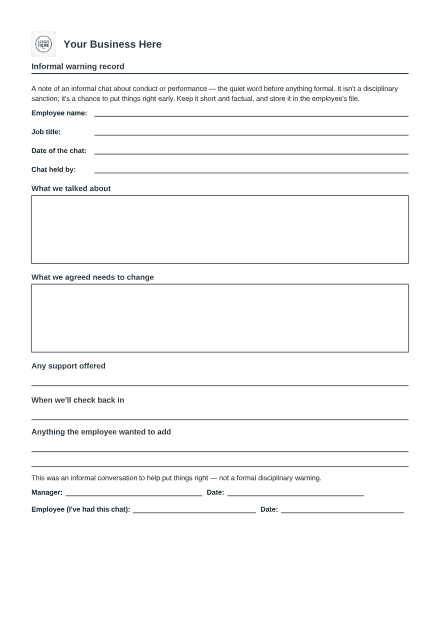
Informal warning record
A quiet word, written down — so there's a record if it goes further.
£7 inc. VAT — yours forever, no subscription.Or get it in the HR Plus pack — £39.
Type your business name and the preview updates in seconds — the real PDF, editable on screen or printable to fill in by pen. Nothing about your business leaves your browser.
What you need to know
The plain-English guidance that comes with this document.
- Try the quiet word first. For minor or early problems, an honest informal chat is often all it takes — and the Acas Code positively encourages sorting things out informally before reaching for the formal machinery. It's usually quicker, kinder, and keeps the working relationship intact.
- Keep informal actually informal. Don't dress a formal warning up as "informal", or vice versa. If the matter is serious, or informal chats haven't worked, use the proper disciplinary route instead — your disciplinary invite, meeting note and outcome letter. Muddling the two is where confusion (and unfairness) creeps in.
- Still write it down — briefly. An informal chat isn't a formal sanction, but a short, factual note is worth keeping. If things don't improve and it later goes formal, this shows you raised it early and gave a fair chance to put it right.
- Say plainly that it isn't a sanction. Make clear to the person — and on this form — that this is a supportive conversation, not a first formal warning. It shouldn't be counted as a step in the formal disciplinary ladder.
- Give a real chance, and follow up. Agree what needs to change, offer any support that would help, and actually check back on the date you set. An informal word with no follow-up teaches people it doesn't matter.
- Don't let them quietly stack up. A run of "informal chats" about the same thing, with nothing formal ever happening, helps no one. If the pattern continues, move to the formal process rather than papering over it.
- Keep it secure. Even an informal note is personal data about someone's conduct — store it in their file, seen only by those who need it.
- Good practice UK-wide; the formal stage differs in NI. Handling things informally first is sensible everywhere. It's the formal disciplinary stage that follows its own statutory route in Northern Ireland (the LRA Code) rather than the Acas Code — see the guidance on your disciplinary invite and outcome letters.
Please note: This is a template for guidance only. Adapt it to your business and check it against current law and your insurance requirements. It is not legal advice.