
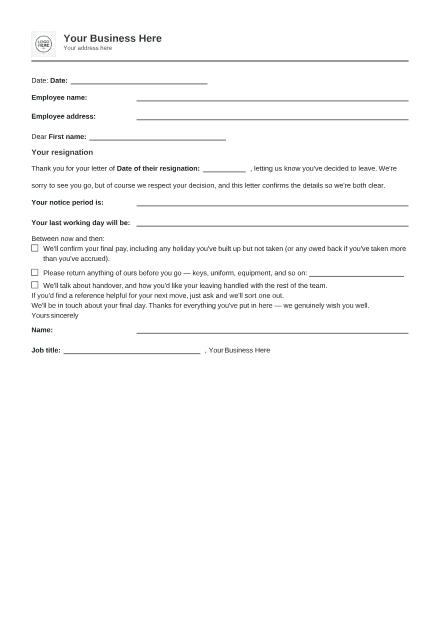
Resignation acknowledgement letter
Acknowledge a resignation and confirm the leaving details.
£4 inc. VAT — yours forever, no subscription.Or get it in the HR Plus pack — £39.
Type your business name and the preview updates in seconds — the real PDF, editable on screen or printable to fill in by pen. Nothing about your business leaves your browser.
What you need to know
The plain-English guidance that comes with this document.
- Don't pounce on a resignation blurted out in anger. If someone says "I quit" in the heat of a row, be careful. The courts (in Omar v Epping Forest) have said resignations are judged objectively — by whether the words really looked "seriously meant" at the time — and a snap resignation in temper may not count. Grabbing it and treating them as gone can rebound as an unfair or constructive dismissal claim. The safe move is to let the dust settle, then check in writing that they really do mean to resign before you act on it.
- Once it's genuinely given, they can't just take it back. A clear, considered resignation can't be unilaterally withdrawn — if the employee later changes their mind, it's your choice whether to agree to them staying. So get it in writing, and this letter confirms you've accepted it and on what terms.
- Get the notice period and last day right. Check their statement of main terms for the notice they owe. Statutory minimum notice from an employee is one week once they've been employed a month, but their contract may say more. Confirm the actual last working day in writing so there's no confusion about final pay or holiday.
- Do the leaving sums properly. Work out final pay, any accrued-but-untaken holiday to pay, and whether they've taken more holiday than they'd built up (which you can sometimes recover if the contract allows). Get this right — final-pay disputes are a common and avoidable sore point.
- You can ask them to work notice, or not. You might want a proper handover, or you might prefer they don't stay around — for example if they're going to a competitor. Options like garden leave or a payment in lieu of notice exist, but only if the contract allows, so check before you act.
- References: be fair and factual. You're not obliged to give a reference in most cases, but if you do it must be true, accurate and not misleading. A short, factual reference confirming dates and role is the common, safe approach.
- Keep the door open, and part well. People talk, and today's leaver is tomorrow's customer, recommender or returning employee. A gracious exit costs nothing and is worth a lot.
- Applies UK-wide. The principles on resignation, notice and final pay apply across the UK; Northern Ireland's employment law is separate but similar on these points.
Please note: This is a template for guidance only. Adapt it to your business and check it against current law and your insurance requirements. It is not legal advice.