
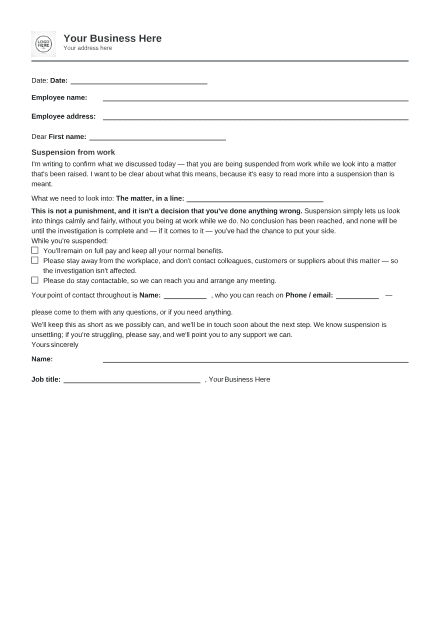
Suspension letter
Confirm a precautionary suspension — neutral, full pay, time-limited.
£7 inc. VAT — yours forever, no subscription.Or get it in the HR Plus pack — £39.
Type your business name and the preview updates in seconds — the real PDF, editable on screen or printable to fill in by pen. Nothing about your business leaves your browser.
What you need to know
The plain-English guidance that comes with this document.
- Suspension is a last resort, not a first move. Don't reach for it automatically. Acas is clear that you should first ask whether something less drastic would do — a temporary change of duties, moving someone to different work, or working from home. Suspend only where there's a real reason, such as a genuine risk to the investigation, to other people, or to the business. A knee-jerk suspension can itself become a breach of trust and a constructive dismissal claim.
- Keep it neutral — it is not a sanction. Say plainly, in the letter and in person, that suspension is not a disciplinary penalty and not a finding of guilt. Treating or talking about a suspended person as though they've already been judged is exactly what gets employers into trouble.
- Full pay, always. Unless the contract very clearly allows unpaid suspension (rare, and risky), a suspended employee stays on full pay and keeps their benefits. Cutting pay during suspension is usually an unlawful deduction and a breach of contract.
- Make it as short as possible, and keep it under review. Suspension shouldn't drift. Get on with the investigation, keep the person updated, and lift the suspension as soon as it's no longer needed. An open-ended suspension with radio silence is both unfair and legally dangerous.
- Give them a point of contact and some support. Being suspended is isolating and stressful. Naming a contact person, keeping in touch, and signposting any support (an employee assistance line, or just an open door) matters — both humanly and legally.
- Keep it confidential. Tell only those who genuinely need to know, and ask the employee to do the same. Gossip around a suspension can damage the person's reputation and land you with a separate complaint.
- It leads somewhere — use the rest of the process. Suspension is the pause, not the process. Follow it with a proper investigation (see the investigation meeting note), and if matters proceed, your disciplinary invite, meeting note and outcome letter.
- Applies UK-wide; the formal disciplinary route differs in NI. The suspension principles here apply across the UK. The Acas Code governs the disciplinary process in England, Wales and Scotland; Northern Ireland follows the LRA Code and its own statutory procedures — see the guidance on your disciplinary documents.
Please note: This is a template for guidance only. Adapt it to your business and check it against current law and your insurance requirements. It is not legal advice.